
Beyond English: The Secret Toolkit for Teaching Abroad
🎙️ Beyond English: The Secret Toolkit for Teaching Abroad
Tune in every week with Naomi Venter and Samuel Johannes as they unpack real-world insights on teaching, travel, and transformation—where passion meets pedagogy, and classrooms cross continents.
1.0 Introduction: More Than Just a Language
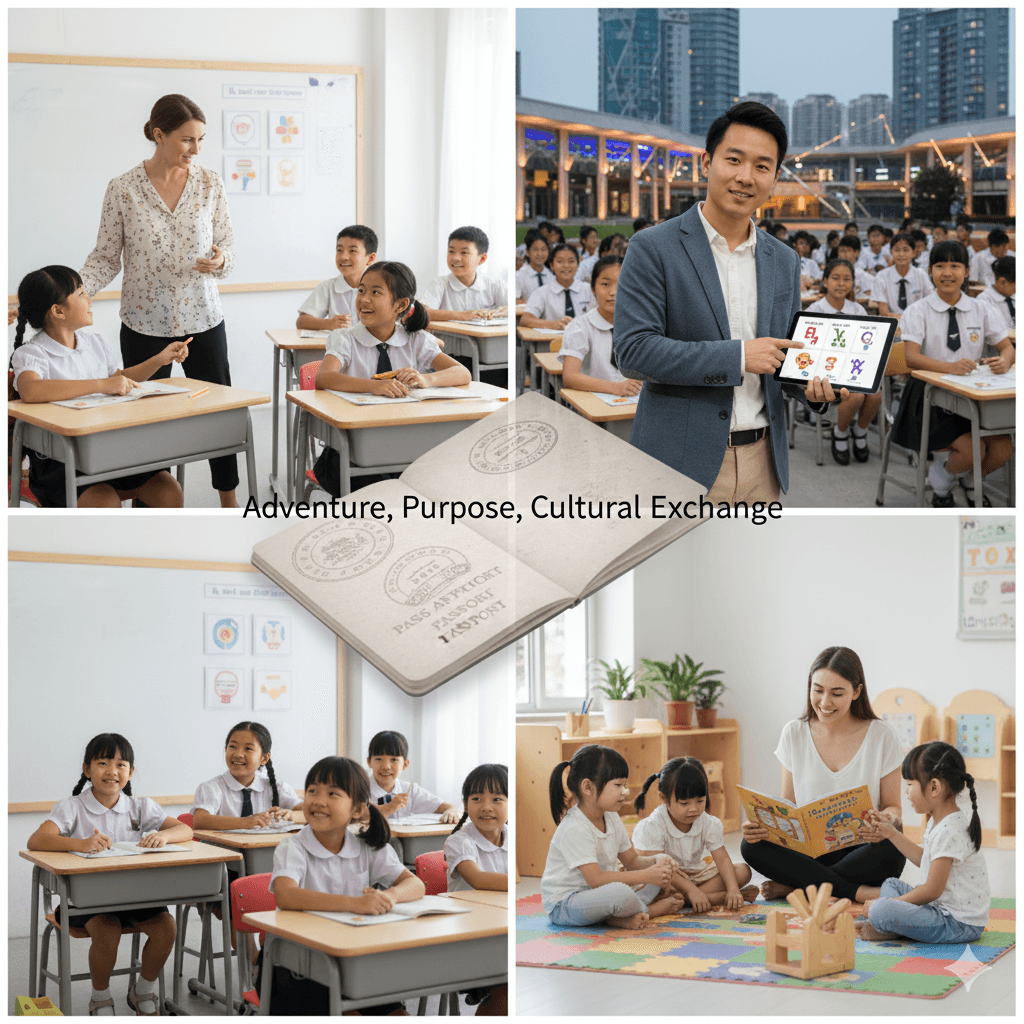
The dream of teaching English abroad is intoxicating—a passport stamped with adventure, purpose, and cultural exchange. You picture yourself in a lively classroom in Bangkok, a bustling school in Beijing, or a serene kindergarten in Hanoi. But here’s the truth most newcomers learn the hard way: being fluent in English doesn’t make you a teacher.
Fluency is your accent. Teaching is your craft.
That’s where TEFL (Teaching English as a Foreign Language) comes in. It doesn’t just validate your language skills—it equips you with a system.
TEFL training turns you from a speaker into an educator, giving you the professional confidence to step into any classroom and command it with clarity and creativity.
2.0 Takeaway 1: Your Native Language Isn’t Your Passport—Methodology Is
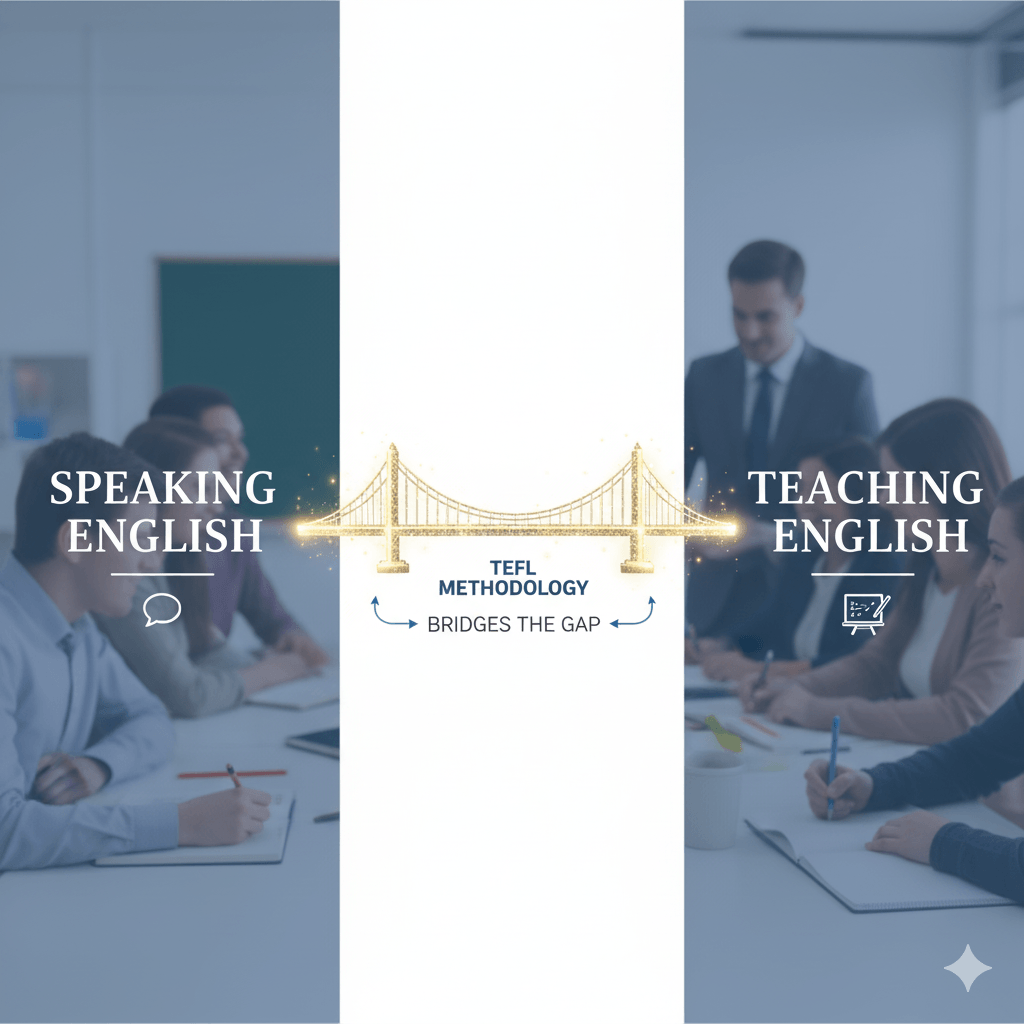
Let’s get this straight: speaking English and teaching English are worlds apart. The gap between the two is called methodology—and TEFL bridges it beautifully.
Through TEFL, you learn how to design lessons, manage classrooms, assess progress, and—most importantly—engage learners who think, feel, and process differently from you.
In countries like China, Vietnam, Thailand, and the UAE, TEFL certification isn’t optional. It’s a visa requirement. Think of it as your international teaching license—your proof that you don’t just speak the language, you can transfer it.
So no, your passport doesn’t get you the job. Your method does.
3.0 Takeaway 2: The Power of Montessori Meets TEFL
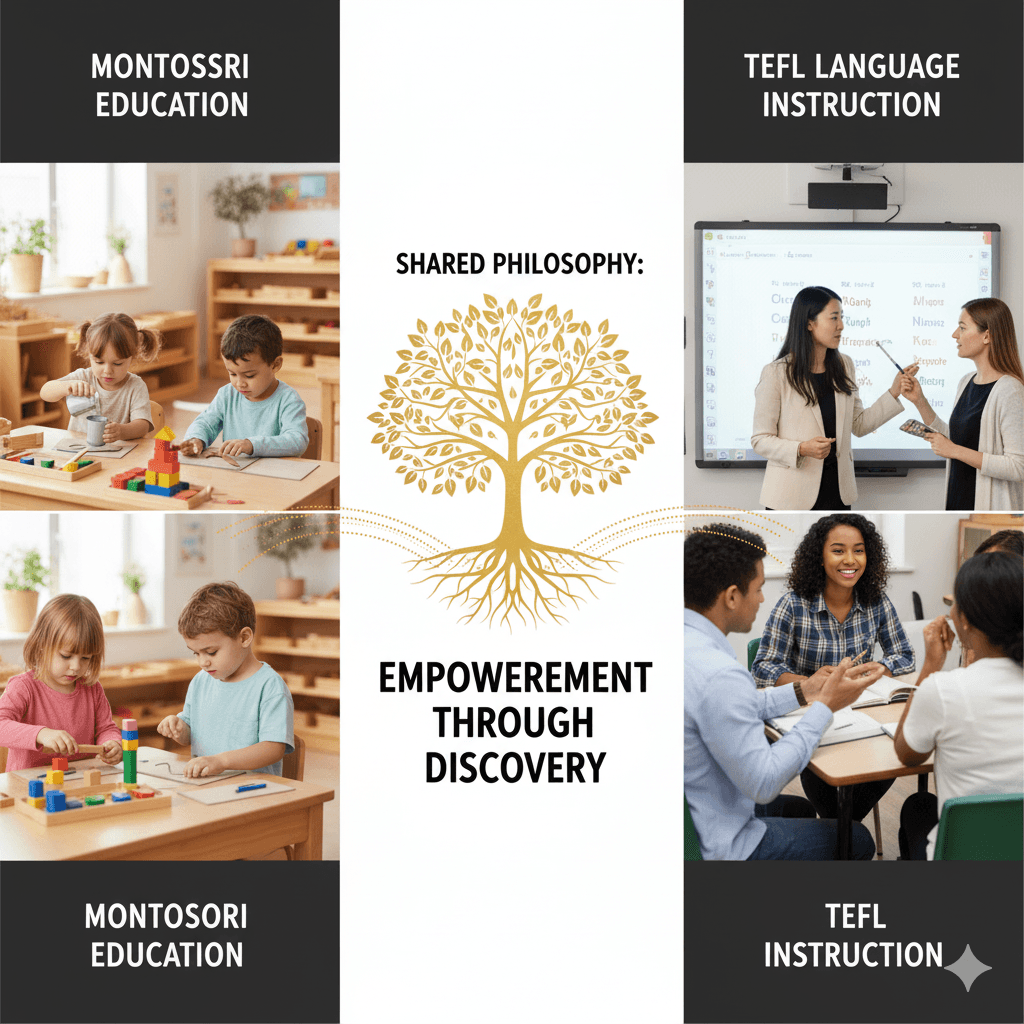
On the surface, Montessori and TEFL may seem like distant cousins—one rooted in early childhood education, the other in language instruction. But at their core, they share a single philosophy: empowerment through discovery.
Montessori says, “Help me do it myself.”
TEFL says, “Help me say it myself.”
Both favor hands-on, discovery-based learning over rote memorization. A Montessori-inspired TEFL teacher doesn’t just tell a child to repeat “apple”—they hand the child an apple. They link sound to sight, language to action, and experience to meaning.
It’s this tactile, sensory-rich connection that makes language learning not only effective but unforgettable. The result? A classroom alive with curiosity—and a teacher whose lessons stick.
4.0 Takeaway 3: Build a Teacher’s Philosophical Toolkit
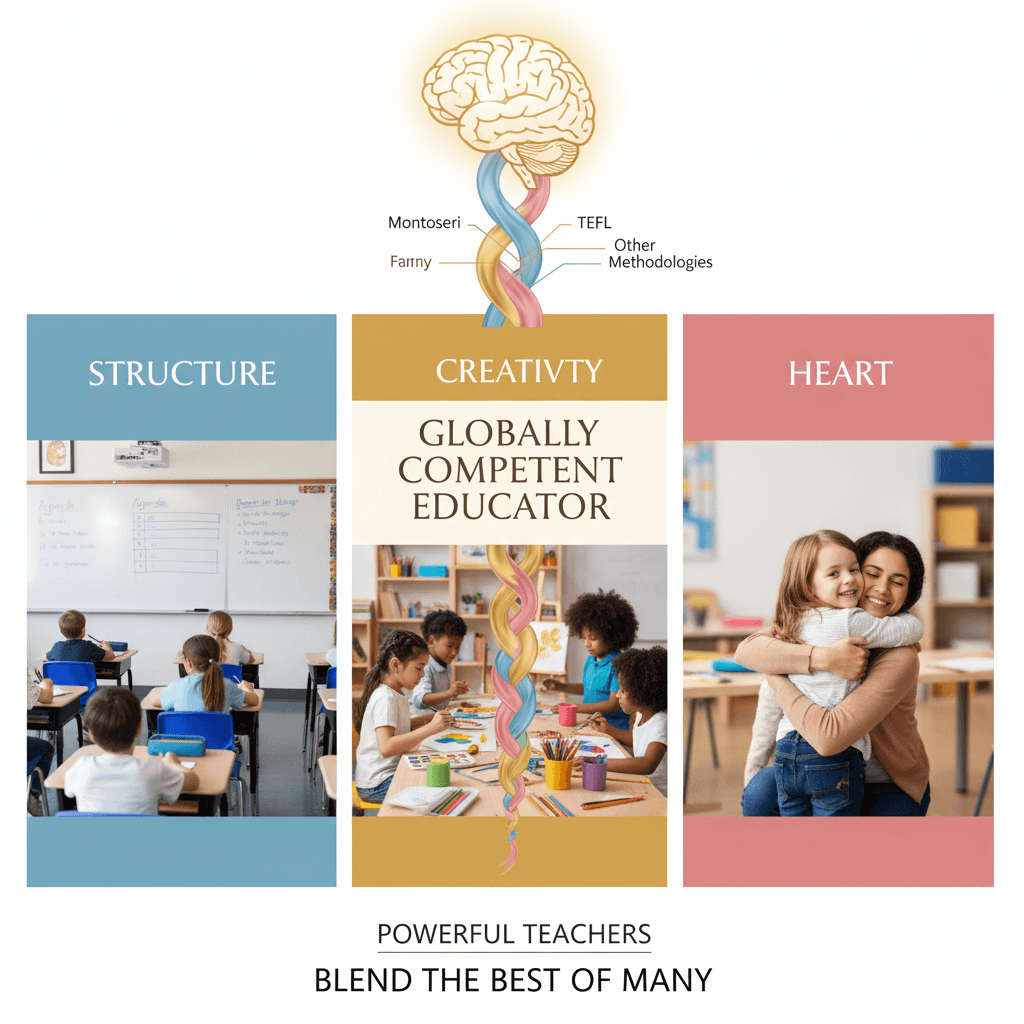
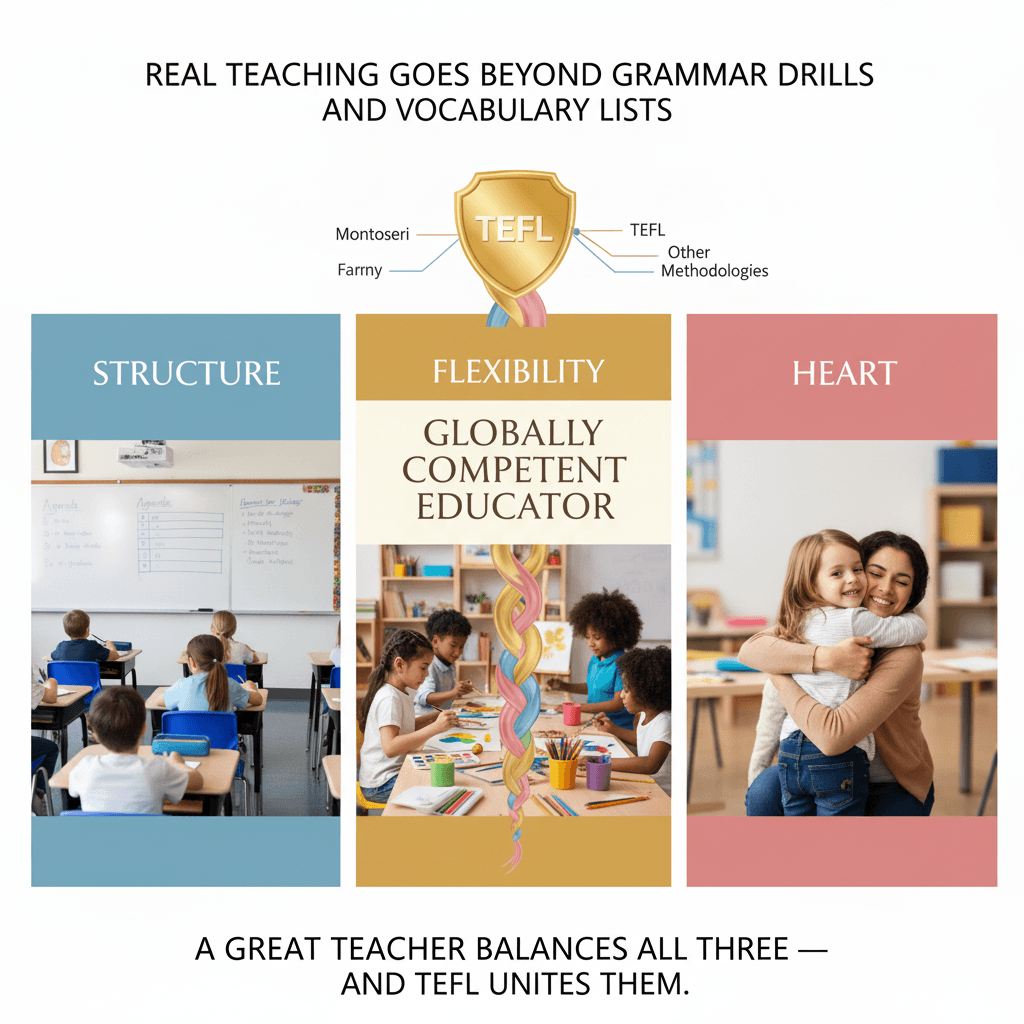
The most powerful teachers don’t cling to one philosophy—they blend the best of many. A globally competent educator knows how to move between structure, creativity, and heart.
Structure: South Africa’s CAPS curriculum brings measurable learning outcomes and clarity.
Freedom: The K-12 system nurtures creativity, teamwork, and project-based learning.
Soul: Montessori gives learners agency—teaching independence and joy in discovery.
Blend them, and you create a classroom that’s structured yet flexible, disciplined yet human.
CAPS gives structure.
K-12 gives freedom.
Montessori gives soul.
TEFL gives reach.
That’s your global teaching toolkit—ready for any classroom, anywhere.
5.0 Takeaway 4: TEFL—Your Global Professional Currency
Here’s the business reality of education: TEFL is the currency that converts your potential into opportunity. It’s not just a certificate you hang on your wall; it’s a credential that travels.
From Johannesburg to Seoul, Bangkok to Dubai, TEFL says to employers:
“I’m trained. I’m credible. I’m ready.”
It shows you’ve invested in your craft, that you understand how learners think, and that you can deliver results with empathy and professionalism. Governments, private schools, and international academies alike recognize TEFL as a global benchmark of teaching excellence.
More than that, it’s your bridge between cultures. It lets you turn your voice into impact—and your skills into a sustainable global career.

6.0 Conclusion: Beyond Borders and Tests
Real teaching goes beyond grammar drills and vocabulary lists. It’s about structure, flexibility, and heart. A great teacher balances all three—and TEFL unites them.
Together, TEFL, CAPS, K-12, and Montessori form a universal language of education—one that transcends borders, curricula, and traditions. They create teachers who don’t just teach English; they teach understanding.
So the question isn’t, “Can you speak English?”
The real question is, “Can you teach it so others can thrive?”
GET IN TOUCH
Contact Us
Travel or Service-Oriented
You’re welcome to visit us at our Johannesburg or Cape Town offices — we’ll make sure your journey is smooth from start to finish.
Open Hours
Mon-Fri: 9 AM – 6 PM
Saturday: 9 AM – 2 PM
Sunday: Closed
Contacts
Cape Town: 18 Stephan Street, Westcoast. Western Cape 7380
Johannesburg: 267 Oak Avenue,
Ferndale
Email: info@eslteachersabroad.com
Email: samuel@eslteachersabroad.com
Téléphone: +27 84 638 5262
Téléphone: +27 84 879 3552
Visit Us
267 Oak Avenue,
Ferndale, Johannesburg,
South Africa