Michelle & Caleb
English Teachers — China
As a couple, we were nervous about moving abroad — but the team made everything simple and stress-free.
Play video
Many qualified teachers—especially those with a PGCE, Bachelor of Education, or SACE registration—often ask the same question:
If I already have a teaching qualification, why do I still need a TEFL certificate?
The answer lies in how fast global education has changed compared to how slowly traditional curricula are updated.
Teaching today—especially in international and ESL classrooms—requires more than subject knowledge or general pedagogy. Learners are increasingly multilingual, culturally diverse, and exposed to digital-first learning environments.
This article explores why a TEFL certificate remains highly relevant, how it complements your existing qualification, and why it continues to matter when teaching internationally—particularly in competitive regions such as the Middle East.
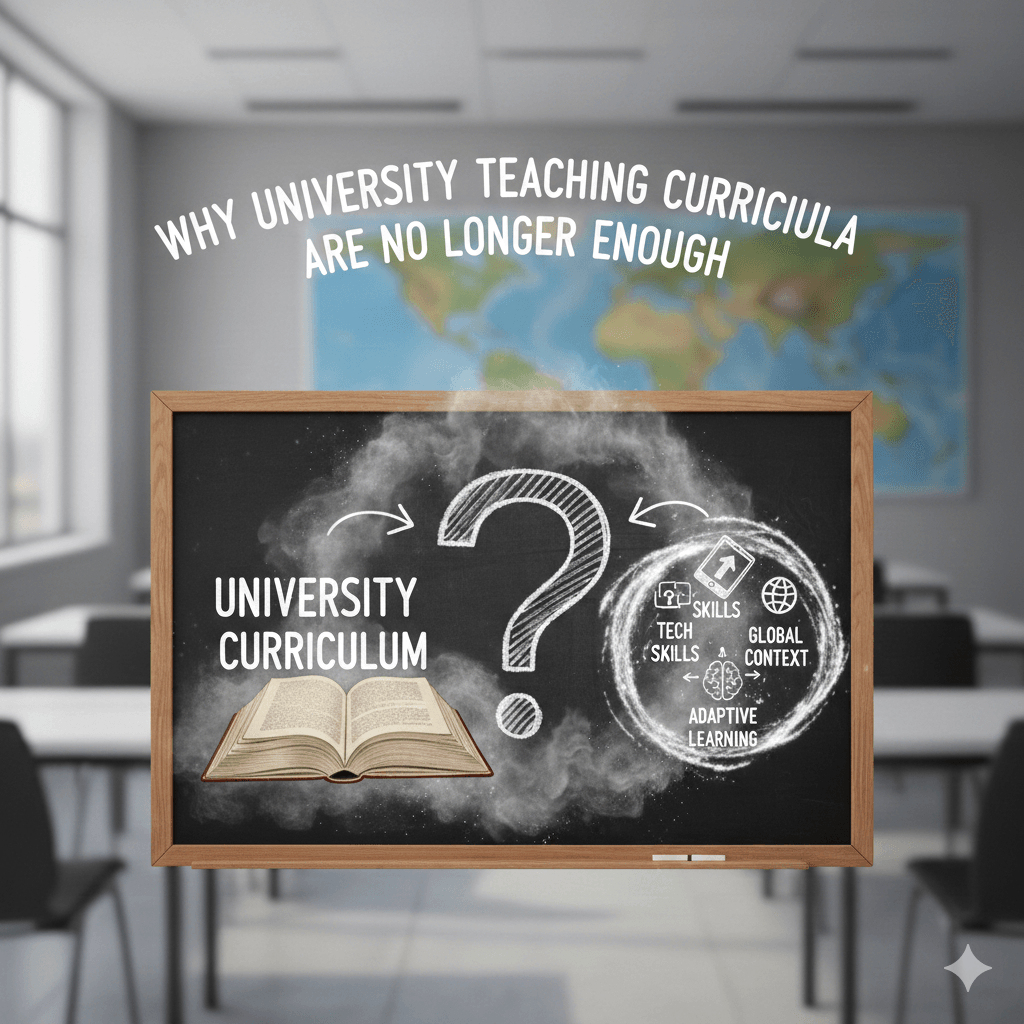
Most university teacher-training programmes were designed for a very different classroom environment. In many cases, these curricula have not been significantly updated in over a decade.
Meanwhile, modern classrooms now rely heavily on:
Traditional chalkboards have been replaced by interactive smartboards and visual teaching tools.
Lessons, assignments, and feedback are now delivered through structured online platforms.
Teachers are increasingly expected to work alongside AI tools and adaptive learning technologies.
Despite these changes, many newly qualified teachers leave university without practical training in technology-driven teaching or international classroom management.
This creates a clear skills gap—especially for teachers who want to work abroad, where digital competence and cross-cultural teaching skills are no longer optional.

Teaching today is no longer limited to textbooks, exams, and one-way instruction. Across the world, classrooms have evolved to reflect how students learn, think, and engage in the modern age.
Learners now use computers and digital tools as a normal part of everyday learning.
Lessons are interactive, discussion-based, and designed around student participation.
Technology and AI are embedded into lesson delivery, assessment, and feedback systems.
Education now prioritises problem-solving, creativity, and critical thinking skills.
Countries in the Middle East and parts of Asia have moved far ahead in adopting these systems. Teachers trained only under traditional models often struggle to adjust without additional professional training.
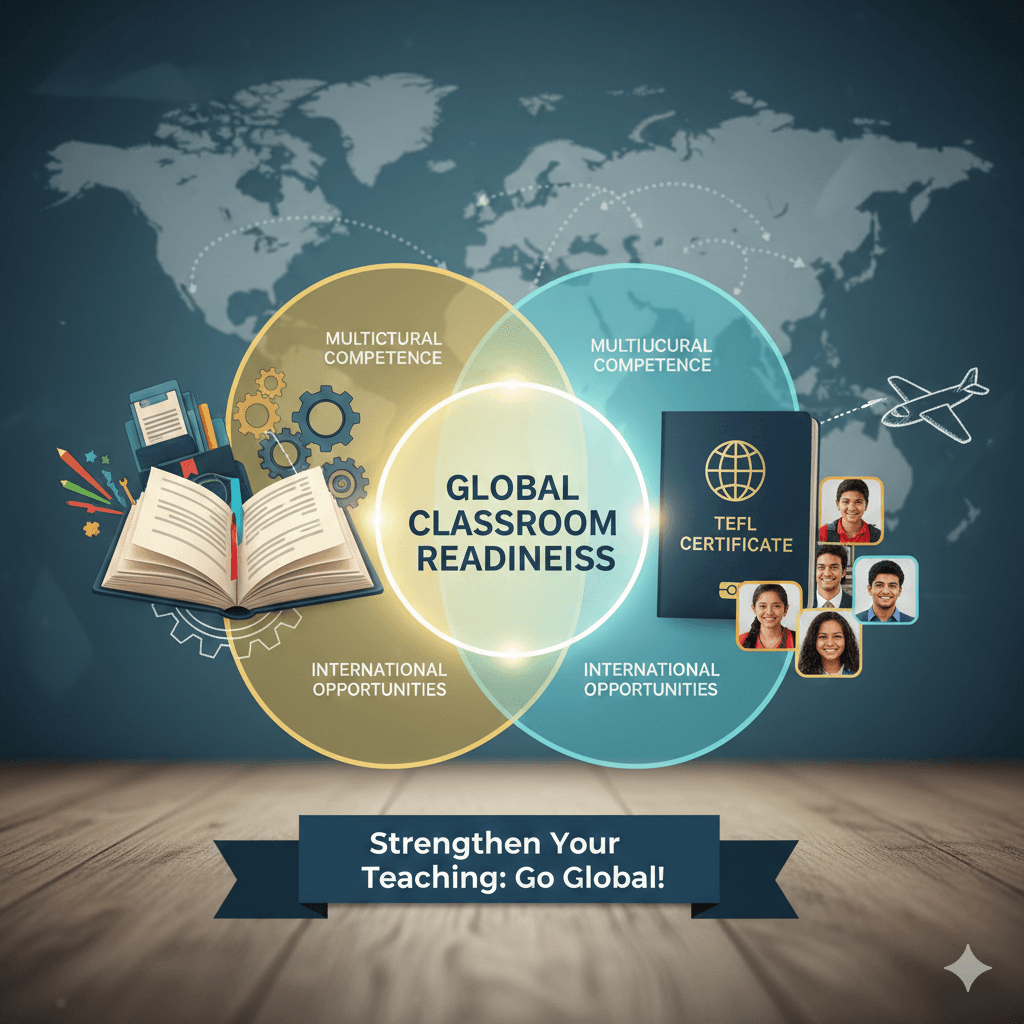
A TEFL certificate does not replace your teaching degree. Instead, it strengthens it by preparing you for international and multicultural classrooms where learners have diverse language backgrounds.
Learn proven methods for teaching English to students who are not native speakers.
Manage multicultural classrooms with students from diverse linguistic and cultural backgrounds.
Design lessons that align with international curricula and ESL learning objectives.
Adapt your teaching style for K–12, Montessori, and other child-centred education systems.
Use smartboards, digital tools, and AI-supported platforms confidently in your teaching.
This practical focus is why TEFL remains valuable—even for licensed teachers seeking to work internationally.
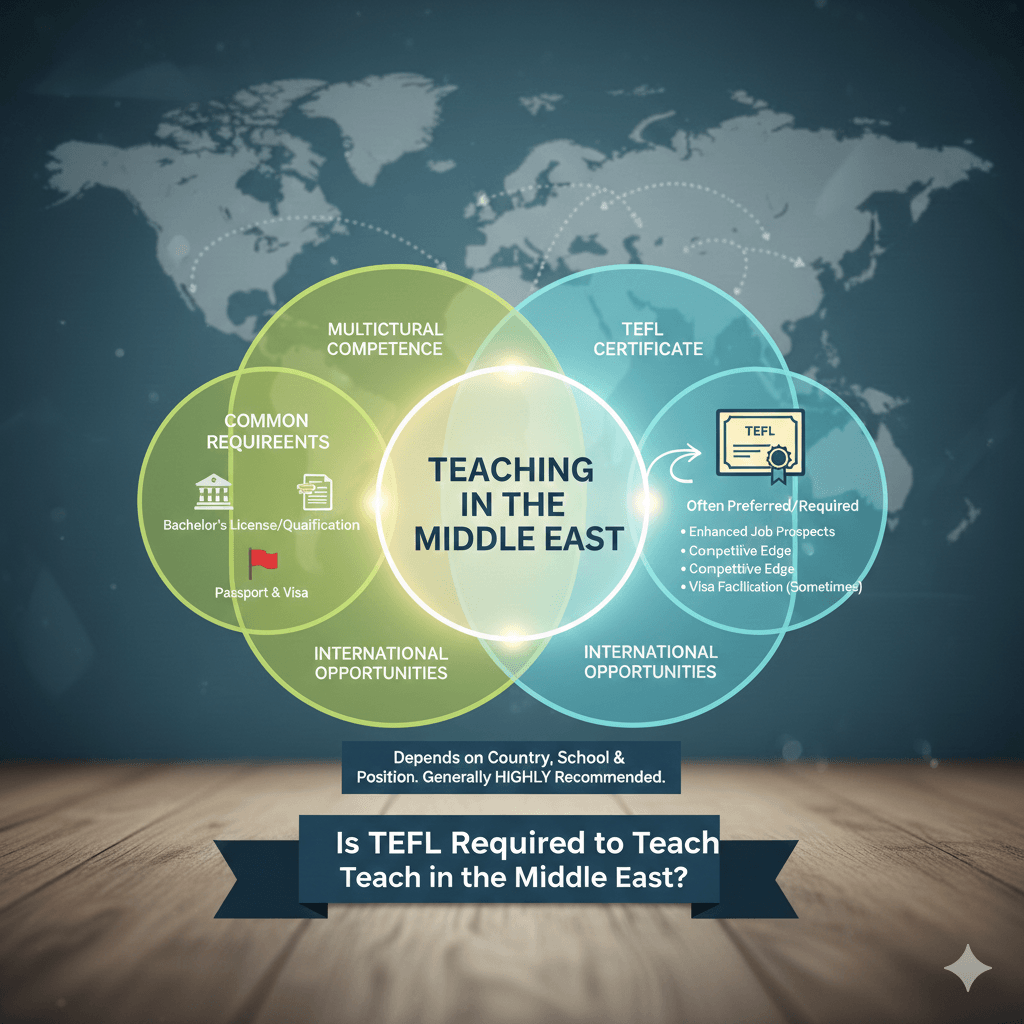
The requirement for a TEFL certificate in the Middle East is not always straightforward. Expectations can vary significantly depending on several key factors.
Different countries in the Middle East apply different regulations and teaching standards.
International schools, private institutions, and language centres set their own hiring criteria.
Agencies often recommend or prioritise candidates with both formal teaching and TEFL credentials.
In many cases, a Bachelor of Education or PGCE is mandatory, while TEFL is viewed as a strong professional advantage.
✔ Candidates with both teaching qualifications and TEFL certification are often prioritised
✔ TEFL may not always be legally required, but it frequently influences shortlisting and hiring decisions
While TEFL is not always a legal requirement, it often plays a decisive role in securing interviews and standing out in competitive Middle Eastern teaching markets.

When applying to teach abroad, schools in the Middle East follow strict hiring criteria. Applications are carefully screened, and only candidates who meet specific professional standards are shortlisted.
Schools require a recognised education degree—not a general BA or an unrelated qualification.
Most schools expect at least 2–3 years of verifiable classroom teaching experience.
Strong, verifiable professional references are essential for serious consideration.
Schools look for teachers who can manage diverse classrooms confidently and professionally.
Clear communication, professionalism, and cultural awareness are highly valued.
Applications are often rejected immediately if qualifications do not match the job description.
Even fully qualified teachers can be rejected for international roles if their English proficiency does not meet professional standards.
Clear pronunciation and understandable speech are essential in international classrooms.
Schools evaluate how well teachers communicate through emails, reports, and lesson plans.
Confident spoken English signals classroom authority and professionalism.
Introduction videos are often used to assess communication and presentation skills.
TEFL training often helps teachers strengthen these areas, making them far more competitive internationally.
Teaching internationally today is no longer just about having a degree — it’s about being prepared, confident, and globally competitive.
Whether you’re exploring international teaching, upgrading your skills, or planning your next move, the right guidance and training can make all the difference.
If you’re serious about teaching abroad or strengthening your professional profile, now is the best time to take the next step.
Join a growing community of real teachers, start learning with a free TEFL course, or speak directly with one of our experts for personalised guidance.
Learn at your pace. Connect with real teachers. Get expert support — and start building your international teaching future today.
At ESL Teachers Abroad, we provide internationally recognized TEFL courses designed to meet different career goals and experience levels.
Ideal for beginners or those exploring teaching abroad. This course introduces the fundamentals of ESL teaching, lesson planning, and classroom management.
Start Learning for FreeThe most widely accepted TEFL qualification. It meets the requirements of most Chinese schools and visa regulations, offering deeper training in methodology, grammar, and practical classroom skills.
Start Learning for FreeBest for teachers seeking advanced training and stronger job prospects. This course includes in-depth theory, practical components, and preparation for long-term ESL careers.
Start Learning for FreeEach course equips you with the confidence and skills needed to step into a Chinese classroom fully prepared.
Tap to play. Real journeys — how our program made overseas teaching simple, credible, and life-changing.
As a couple, we were nervous about moving abroad — but the team made everything simple and stress-free.
Play videoThis opportunity changed my life — and here’s how it all came together.
Play videoTheir program gave me the skills, guidance, and confidence to teach abroad — life-changing!
Play videoThis opportunity changed my life — and here’s the story behind it.
Play videoI never imagined I’d teach abroad — this program made it possible.
Play videoThe support I received helped me land my dream job teaching overseas.
Play videoVerified Google reviews from teachers who completed our free TEFL and secured supported teaching roles overseas.
View all Google reviews →“Everything was clear and honest. I felt supported from day one.”
“The interview prep and intro video helped me stand out immediately.”
“Real people, real guidance — not just an online course.”
GET IN TOUCH
Contact Us
Travel or Service-Oriented
You’re welcome to visit us at our Johannesburg or Cape Town offices — we’ll make sure your journey is smooth from start to finish.
Open Hours
Mon-Fri: 9 AM – 6 PM
Saturday: 9 AM – 2 PM
Sunday: Closed
Contacts
Cape Town: 18 Stephan Street, Westcoast. Western Cape 7380
Johannesburg: 267 Oak Avenue,
Ferndale
Email: info@eslteachersabroad.com
Email: samuel@eslteachersabroad.com
Téléphone: +27 84 638 5262
Téléphone: +27 84 879 3552
267 Oak Avenue,
Ferndale, Johannesburg,
South Africa