Michelle & Caleb
English Teachers — China
As a couple, we were nervous about moving abroad — but the team made everything simple and stress-free.
Play video
A Practical Guide for Teachers and Professionals Moving Abroad
Relocating to the Middle East can be one of the most rewarding decisions you ever make—professionally, financially, and personally. Countries such as the UAE, Saudi Arabia, Qatar, and others continue to attract teachers and skilled professionals from across Africa and the world with competitive salaries, tax-free income, and a high standard of living.
However, success in the Middle East is not just about qualifications or salary. It is about preparation, mindset, cultural respect, and self-discipline. Many people who struggle abroad don’t fail because they are unqualified; they struggle because they underestimate how different the environment truly is.
Research the culture, rules, and expectations of your destination. Read up on housing, transportation, and local work practices before departure.
Understanding and following cultural norms shows respect and helps you integrate more smoothly into your new community.
Avoid assumptions about social behaviour — even small missteps can affect relationships and your professional reputation abroad.
Each country operates differently. What works at home might not work overseas — so ask questions, be flexible, and stay open-minded.
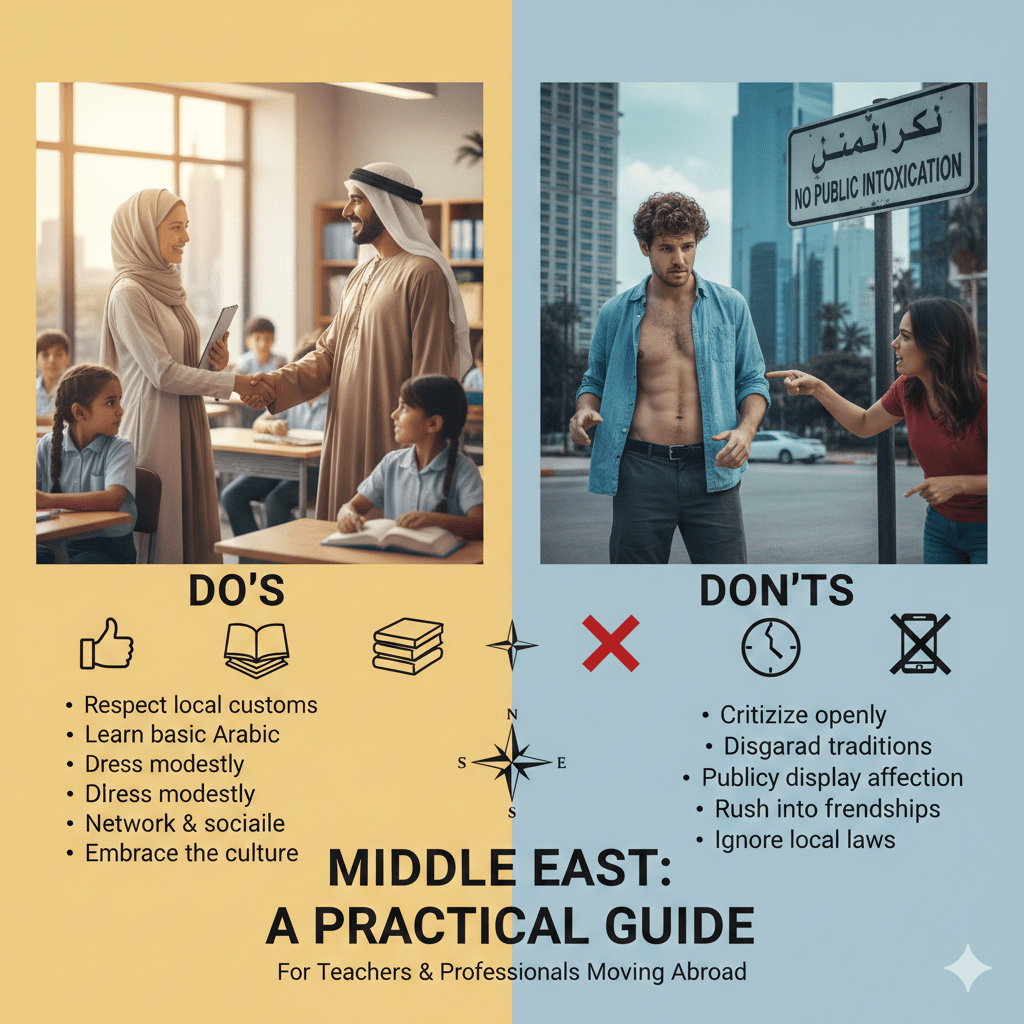
Modesty is expected in public settings. While rules may vary by country, dressing conservatively shows respect and helps you avoid unwanted attention.
Communication styles may be more indirect. Politeness and patience go a long way in professional and social interactions.
Public criticism or jokes about religion, religious leaders, or cultural practices are taken very seriously and may have legal consequences.
Public displays of affection such as kissing or hugging can be considered inappropriate and, in some cases, illegal.
Laws and cultural expectations are enforced. What is overlooked in other countries may not be tolerated here.

Dress code was one of the most discussed topics, and for good reason. How you dress directly affects how you are perceived, treated, and sometimes even reported.
Modest dressing is expected both in professional environments and public spaces.
Men are also expected to dress conservatively, especially outside casual settings.

Professionalism in the Middle East extends far beyond the classroom. Your daily conduct, attitude, reliability, and respect for systems are closely observed.
Schools expect consistency, structure, and respect for established systems from the very first day.
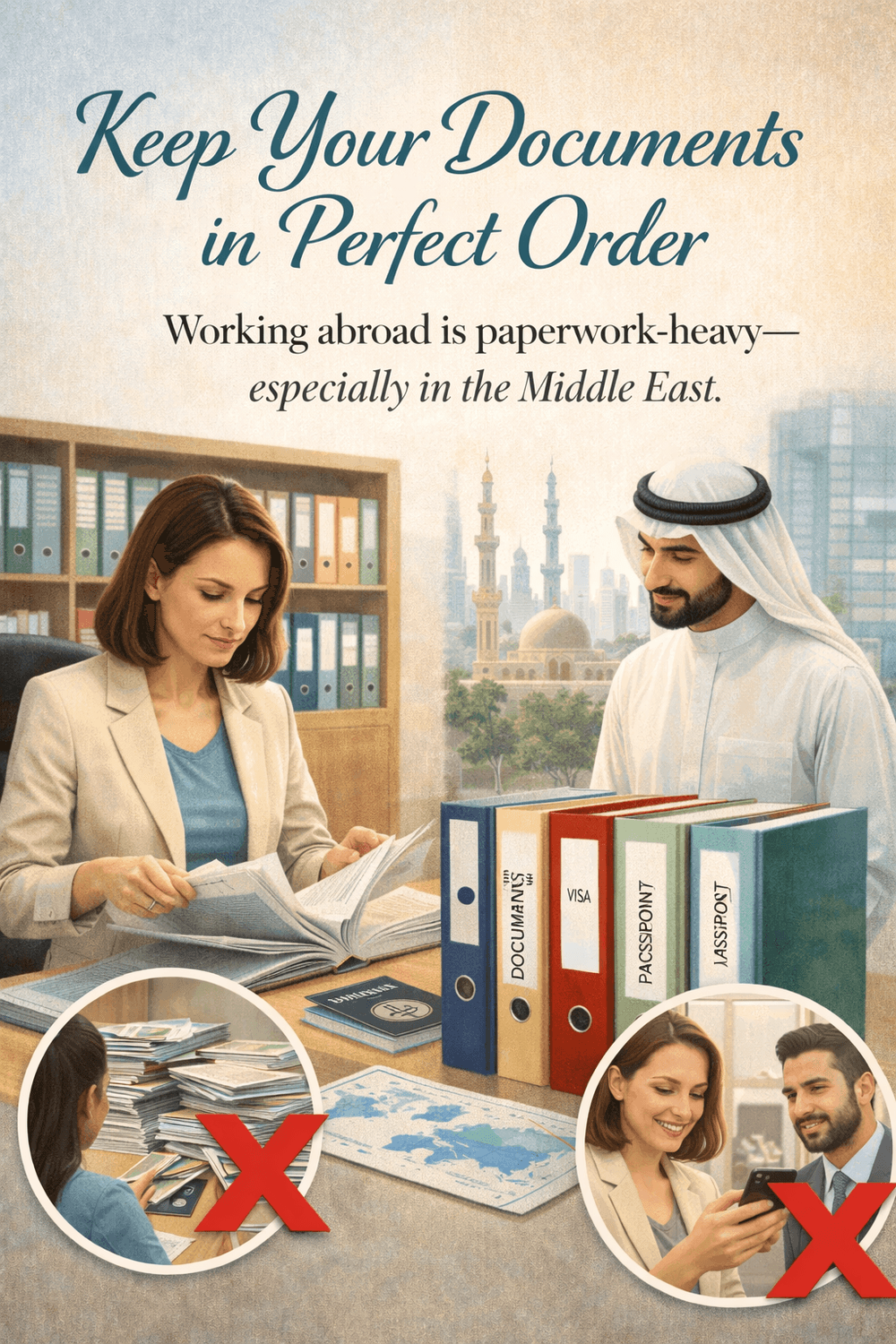
Working abroad is paperwork-heavy — especially in the Middle East. Documentation is not optional, flexible, or negotiable.
These documents are required before you can legally work, reside, or be paid.

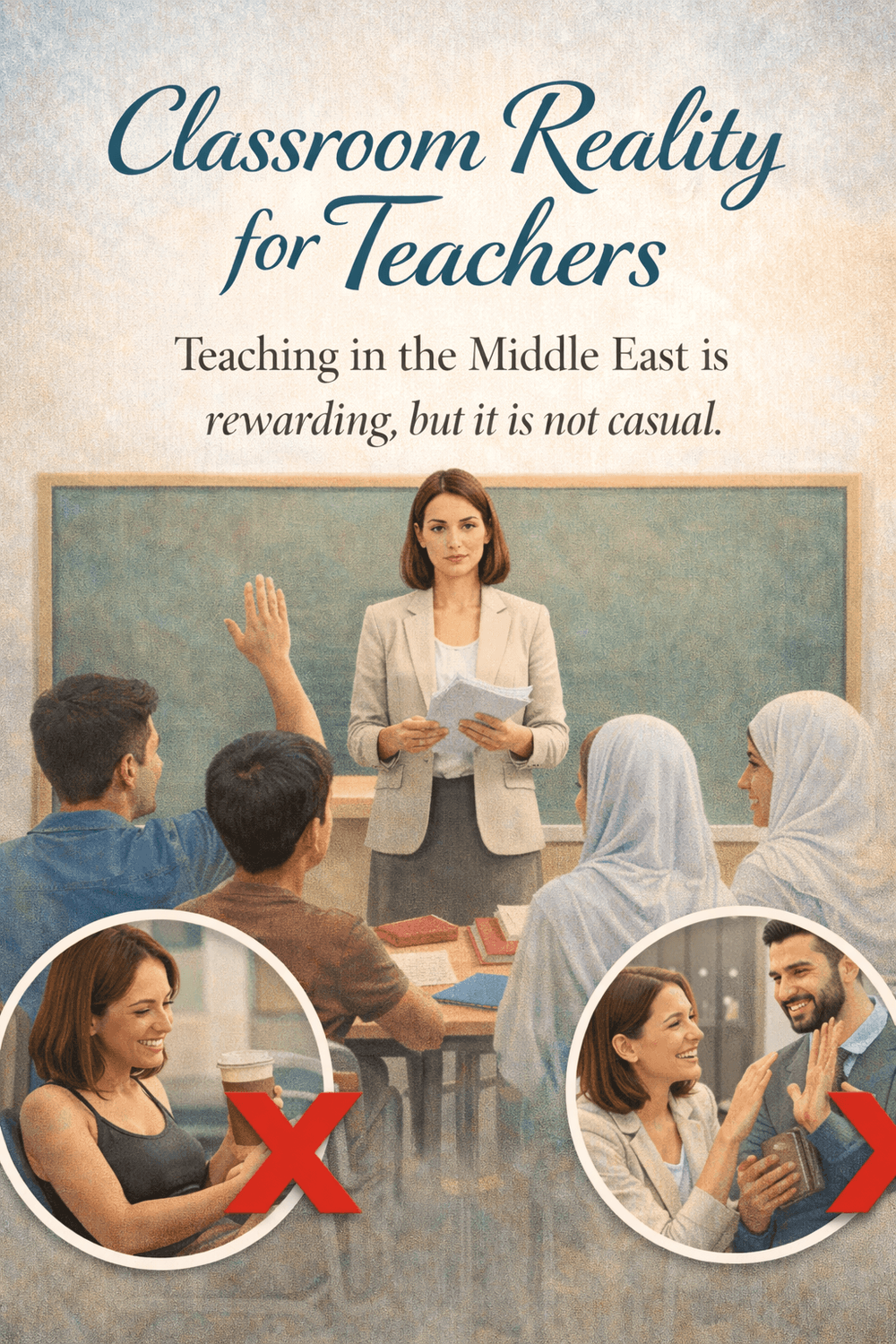
Teaching in the Middle East is rewarding, but it is not casual. Classrooms are structured environments with clear expectations and accountability.
Many schools assume teachers arrive fully prepared to manage demanding classroom environments.
One reason many teachers stay in the Middle East for 10–20 years is simple: the lifestyle works.
While packages vary by country and institution, many teaching contracts include:
Living and working in the Middle East is not about losing your identity — it’s about discipline, respect, and adaptability.
If you are calm, respectful, professional, and willing to learn, the Middle East can offer:
If you prefer a lifestyle without structure, accountability, or boundaries, this may not be the right environment for you.
Teaching internationally today is no longer just about having a degree — it’s about being prepared, confident, and globally competitive.
Whether you’re exploring international teaching, upgrading your skills, or planning your next move, the right guidance and training can make all the difference.
If you’re serious about teaching abroad or strengthening your professional profile, now is the best time to take the next step.
Join a growing community of real teachers, start learning with a free TEFL course, or speak directly with one of our experts for personalised guidance.
Learn at your pace. Connect with real teachers. Get expert support — and start building your international teaching future today.
At ESL Teachers Abroad, we provide internationally recognized TEFL courses designed to meet different career goals and experience levels.
Ideal for beginners or those exploring teaching abroad. This course introduces the fundamentals of ESL teaching, lesson planning, and classroom management.
Start Learning for FreeThe most widely accepted TEFL qualification. It meets the requirements of most Chinese schools and visa regulations, offering deeper training in methodology, grammar, and practical classroom skills.
Start Learning for FreeBest for teachers seeking advanced training and stronger job prospects. This course includes in-depth theory, practical components, and preparation for long-term ESL careers.
Start Learning for FreeEach course equips you with the confidence and skills needed to step into a Chinese classroom fully prepared.
Tap to play. Real journeys — how our program made overseas teaching simple, credible, and life-changing.
As a couple, we were nervous about moving abroad — but the team made everything simple and stress-free.
Play videoThis opportunity changed my life — and here’s how it all came together.
Play videoTheir program gave me the skills, guidance, and confidence to teach abroad — life-changing!
Play videoThis opportunity changed my life — and here’s the story behind it.
Play videoI never imagined I’d teach abroad — this program made it possible.
Play videoThe support I received helped me land my dream job teaching overseas.
Play videoVerified Google reviews from teachers who completed our free TEFL and secured supported teaching roles overseas.
View all Google reviews →“Everything was clear and honest. I felt supported from day one.”
“The interview prep and intro video helped me stand out immediately.”
“Real people, real guidance — not just an online course.”
GET IN TOUCH
Contact Us
Travel or Service-Oriented
You’re welcome to visit us at our Johannesburg or Cape Town offices — we’ll make sure your journey is smooth from start to finish.
Open Hours
Mon-Fri: 9 AM – 6 PM
Saturday: 9 AM – 2 PM
Sunday: Closed
Contacts
Cape Town: 18 Stephan Street, Westcoast. Western Cape 7380
Johannesburg: 267 Oak Avenue,
Ferndale
Email: info@eslteachersabroad.com
Email: samuel@eslteachersabroad.com
Téléphone: +27 84 638 5262
Téléphone: +27 84 879 3552
267 Oak Avenue,
Ferndale, Johannesburg,
South Africa